How to Check K-Beauty Authenticity with the QR Code (Outside or Inside the Box)
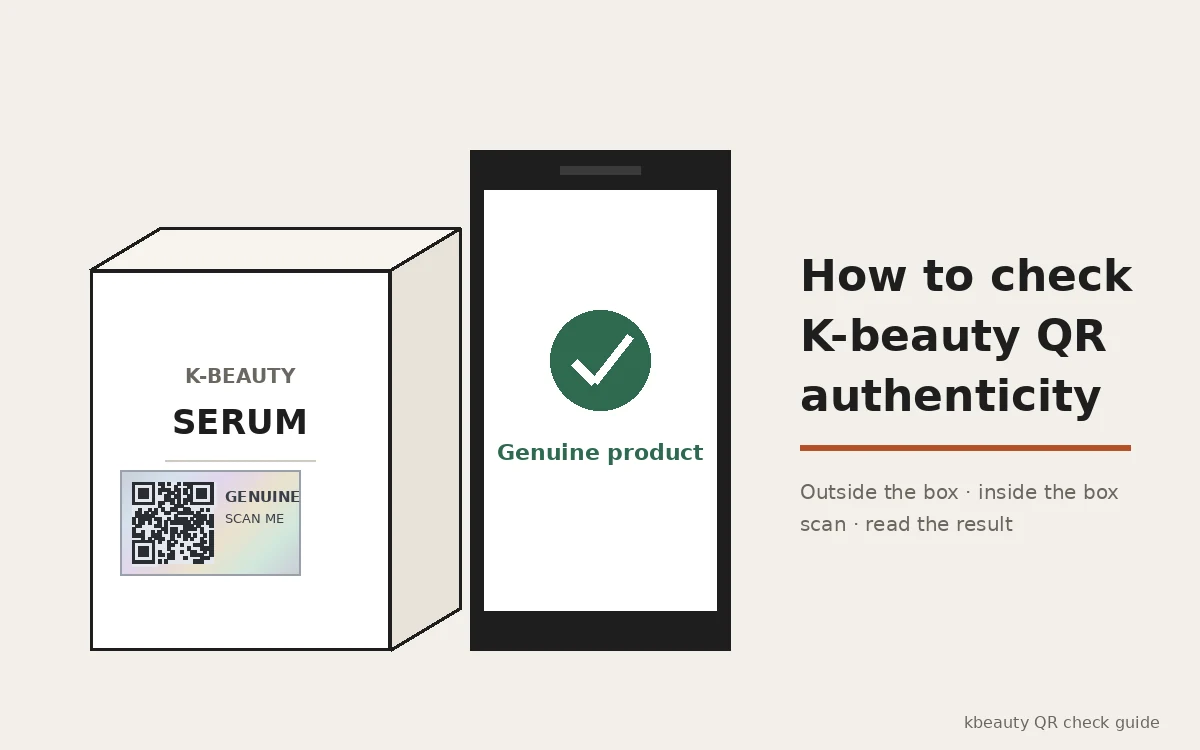
Many Korean skincare brands now add an authenticity QR code or hologram label to their packaging. Some put it on the outside of the box, others print it inside, so you only see it after you open the box. This guide shows you where to look, how to open the box without damaging the code, and how to read the result.
Many Korean skincare brands now add an authenticity QR code or hologram label to their packaging. Some put it on the outside of the box, others print it inside, so you only see it after you open the box. This guide shows you where to look, how to open the box without damaging the code, and how to read the result.
Why K-beauty brands use QR codes
Popular Korean products such as sunscreens, serums and toner pads are copied a lot, and fakes can look almost the same as the real box. To fight this, many brands add a unique code to each item. When you scan it, the brand's own system tells you whether that code belongs to a genuine product. The two most common types are:
- Hologram QR stickers: a shiny label that changes colour when you tilt it. Many Korean brands use the HiddenTag system, and for these you scan with the HiddenTag app, not the normal camera.
- Printed QR codes: printed straight onto the box or onto an authenticity label, sometimes on the inner flap. Medicube, for example, says its genuine-product QR is on the authenticity label of the inner box.
Not every brand uses a QR code, and the label can change from batch to batch. If you can't find one, that does not mean the product is fake. Use the batch code check in Step 5 instead.
Step 1: Look on the outside of the box first
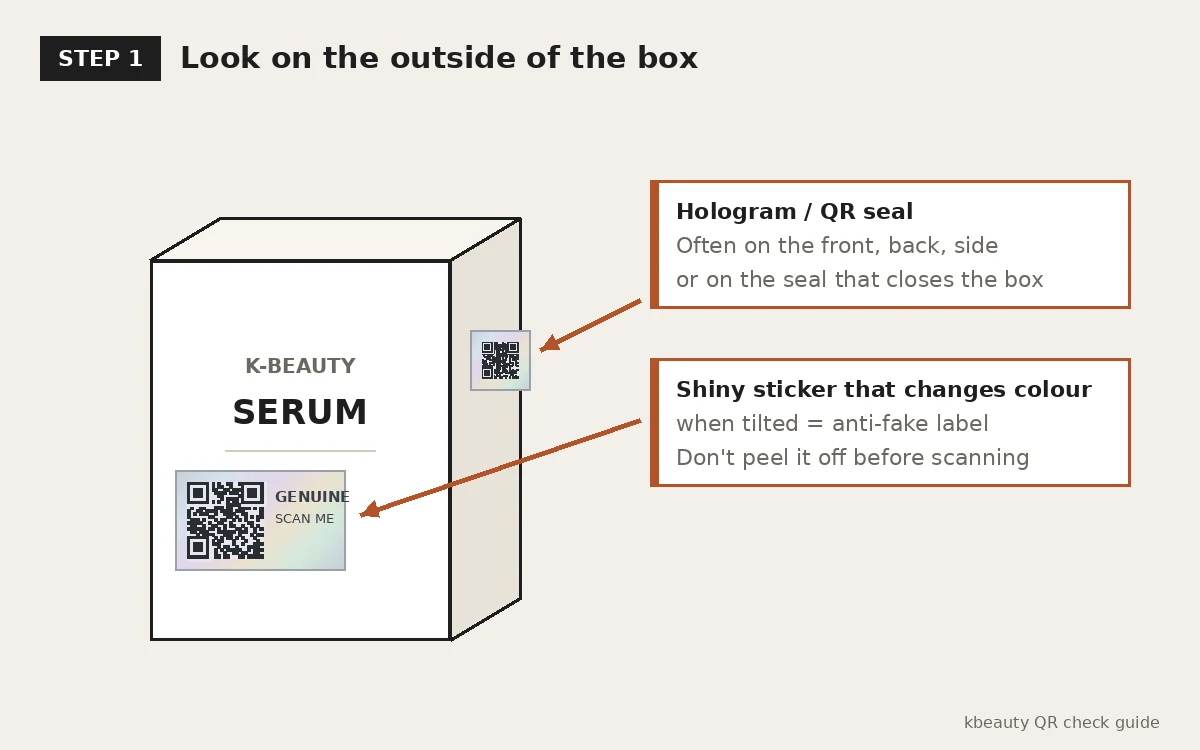
Turn the box around slowly. A QR authenticity label is usually:
- on the back or side panel, near the barcode and ingredient list;
- on the seal sticker that keeps the box closed; or
- a small hologram square on the front.
Tilt it under a light. A real hologram label shifts colour, while a flat printed copy does not. Don't peel or scratch the label before you scan it. Some labels are made to break when removed.
Step 2: No code outside? Open the box and look inside
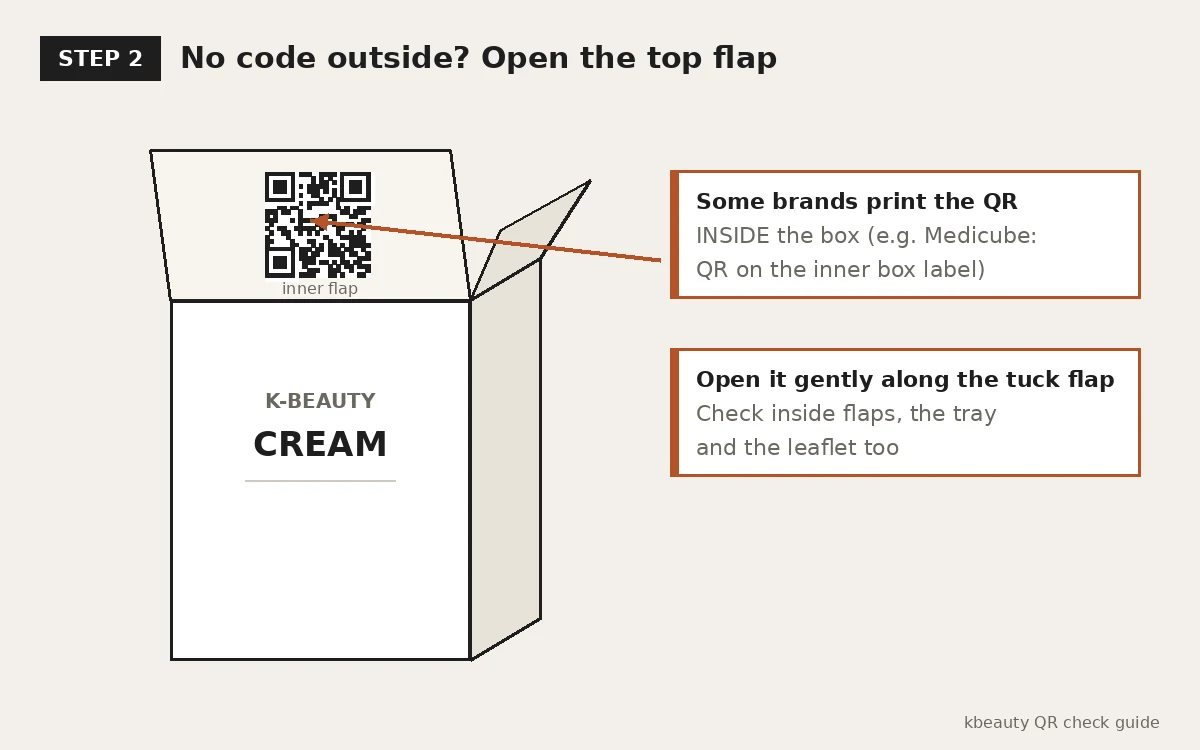
Some brands put the code where a shop can't swap it, inside the packaging. To find it:
- Cut or lift the clear seal sticker on the top flap. Don't tear the box.
- Pull the top tuck flap out gently and fold it fully open.
- Check the inside of every flap, the cardboard insert or tray holding the bottle, and both sides of the leaflet.
- If the product sits in an inner box, check that box's label too.
Open the box carefully, because you may need it for a return if the result is not right.
Step 3: Scan the code with your phone
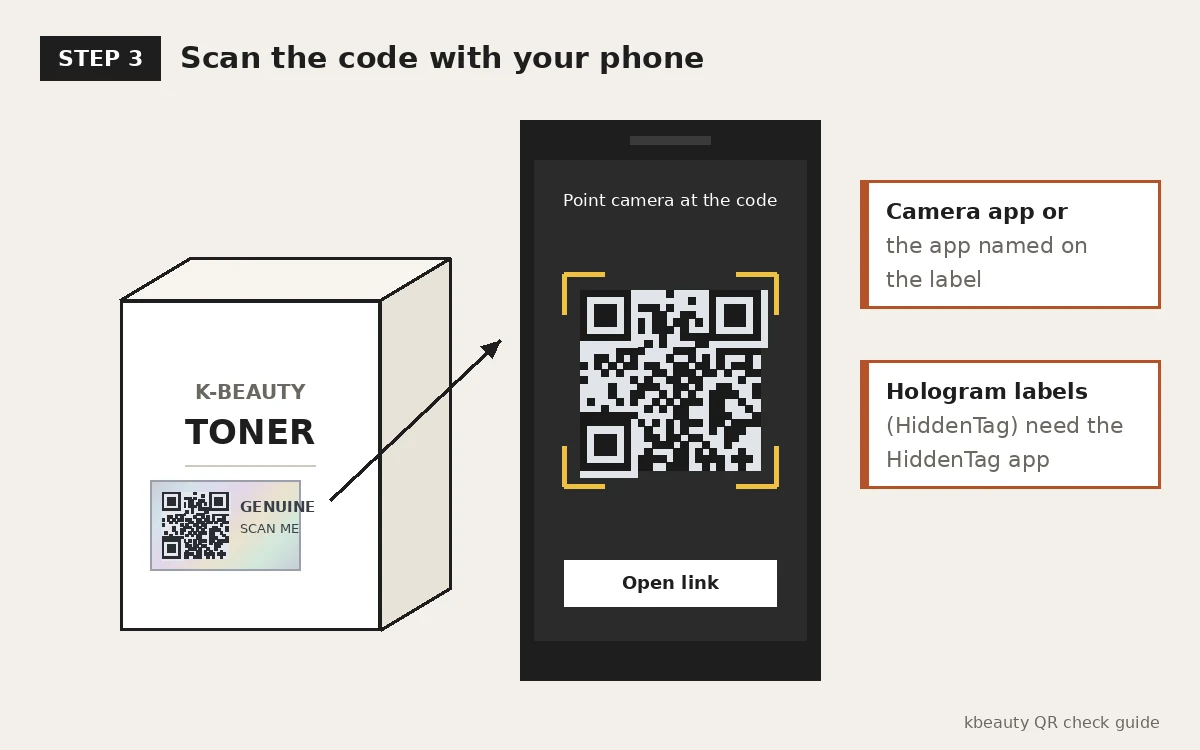
- Printed QR code: open your phone's camera, point it at the code and tap the link that appears.
- Hologram / HiddenTag label: install the official HiddenTag app from the App Store or Google Play and scan with the app. The normal camera usually can't read these labels.
- If the label says to use a specific brand app or website, use that one.
Use good light, avoid glare on shiny labels, and keep the whole code inside the frame.
Step 4: Read the result and check the web address
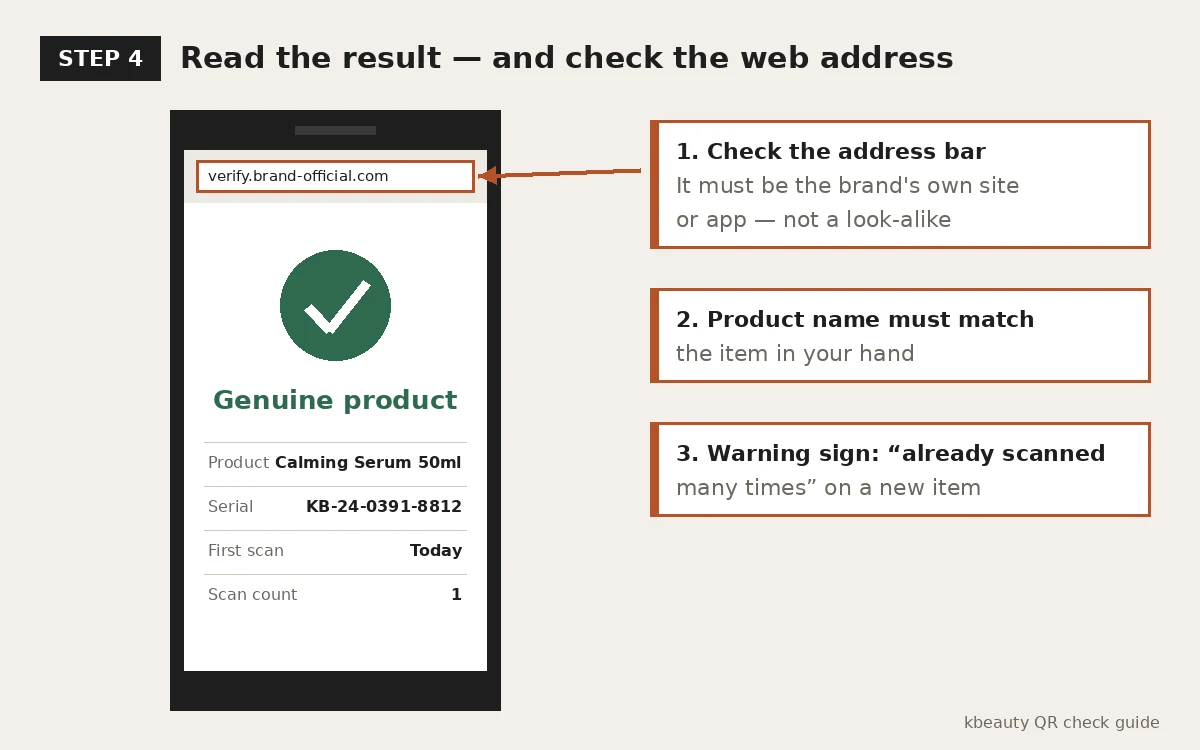
The result alone is not enough, because copied labels can link to fake websites. Check three things:
- The address bar. The page must be on the brand's own website or app. Medicube, for example, tells customers the scan must open medicubeverify.com. A look-alike address or a random short link is a red flag.
- The product details. The name, size or serial on the screen should match the item in your hand.
- Scan history. Some systems show how many times the code was scanned. A brand-new sealed item showing many earlier scans from other places is a warning sign that the code may have been copied.
Step 5: No QR code at all? Use the batch code
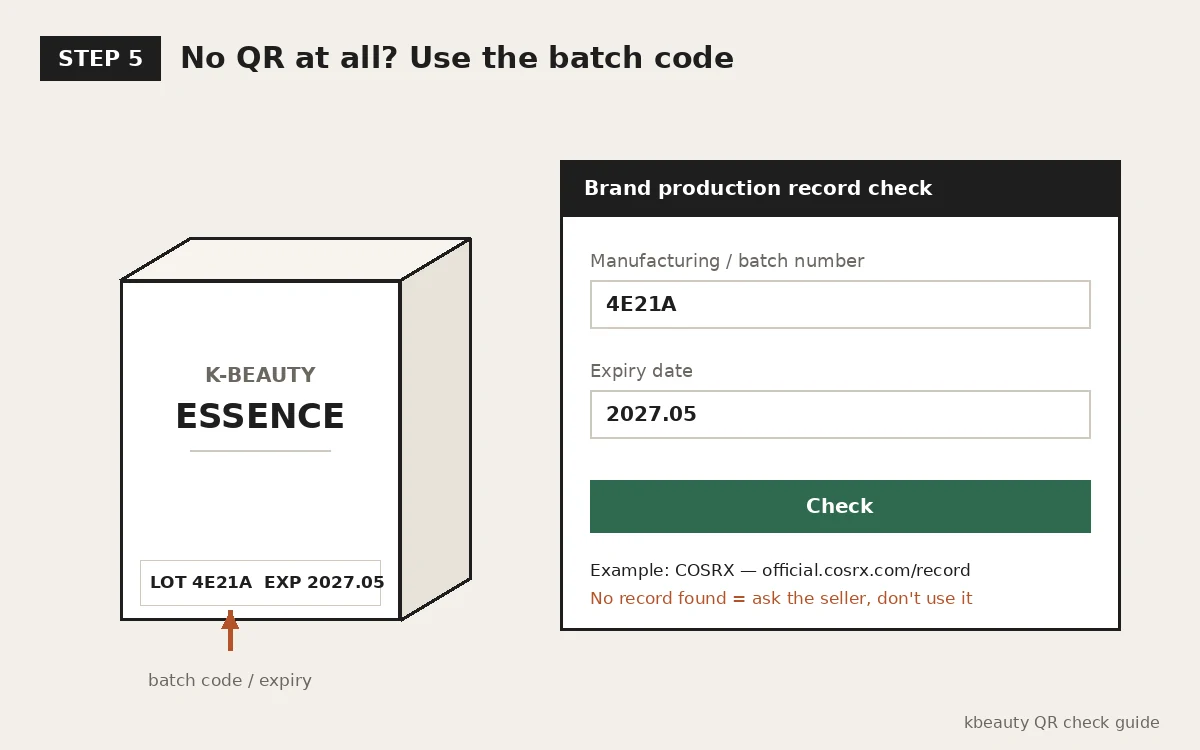
Many brands don't use QR labels. Every genuine product still has a batch / lot number and an expiry date, usually on the bottom of the box or on the bottle. Some brands let you check these online. COSRX, for example, has an official production record check at official.cosrx.com/record: you enter the manufacturing number and expiry date, and it tells you whether COSRX has a production record for that item.
Third-party batch-code sites mostly decode the production date. They are useful for freshness, but they don't prove a product is original.
Quick extra checks
- The barcode of products made in Korea usually starts with 880. Barcodes are easy to copy, so use this as a hint, not proof.
- The box should have clear Korean text and clean printing, with no blurry letters, spelling mistakes or crooked labels.
- The texture and smell should match what you know. A strong alcohol or chemical smell in a product that is normally mild is a warning sign.
- A batch code on the box should match the one on the bottle.
What to do if the result says “not genuine”
- Don't put the product on your skin.
- Take screenshots of the result page (with the address bar visible) and photos of the label, the box and the batch code.
- Contact the shop you bought from and ask for a return or exchange.
- Report it to the brand's customer support so they can follow up on the seller.
Buy from KBeautySouq with confidence
At KBeautySouq every product is sourced through Korean brand distributors, and we leave the original box, seal and authenticity labels in place so you can scan them yourself. If a scan ever gives a result you are not sure about, send us a photo of the label and the result screen on WhatsApp and we will check it with you.
FAQ
Does every Korean skincare product have a QR code?
No. Many genuine products have no authenticity QR, only a barcode and batch code. Brands also change their labels over time, so a missing QR alone does not mean the item is fake.
Why can't my camera read the hologram sticker?
Hologram labels such as HiddenTag are made to be read by their own app. Install the app named on the label and scan again in good light.
Is the QR code inside or outside the box?
It depends on the brand. Check the outside first (back, sides and seal sticker). If there is nothing there, open the top flap and check the inner flaps, the tray and the inner box label.
Can a fake product have a QR code too?
Yes. A QR code can be copied, which is why you should always check that the result opens on the brand's official website or app and that the product details match.